

How Weather Patterns Affect Your Gutter System Year-Round
Most homeowners think about gutters only when they overflow. Professionals in the exterior and roofing trades know the truth is more complex: gutters operate as a year-round hydraulic system that constantly adapts to weather conditions.
Rain intensity, freeze-thaw cycles, seasonal debris loads, and thermal expansion all influence how a gutter system performs over time. When these forces are understood, installers and inspectors can predict failure points before they appear.
This guide explores how different weather patterns affect gutter performance throughout the year and what experienced experts watch for when evaluating a system.
Gutters Are Hydraulic Systems, Not Just Roof Accessories
From a professional perspective, gutters function as small-scale stormwater management systems. Their job is to capture runoff from a large surface area (the roof) and safely channel it through a narrow pathway to the ground.
During heavy storms, a typical residential roof can shed hundreds or even thousands of gallons of water per hour. When rainfall intensity increases, the entire gutter system becomes sensitive to three factors: capacity (whether the gutter size and downspout count can handle peak runoff), flow velocity (how quickly water moves across the roof surface and enters the gutter channel), and drainage efficiency (how effectively the system moves water to downspouts without pooling.)
Weather patterns directly influence all three of these factors, which is why systems that work fine in mild conditions may struggle during seasonal extremes.
Spring: High Rainfall Reveals Design Weaknesses
Spring storms often bring the most consistent rainfall of the year. For gutter systems, this is when hydraulic limitations become obvious.
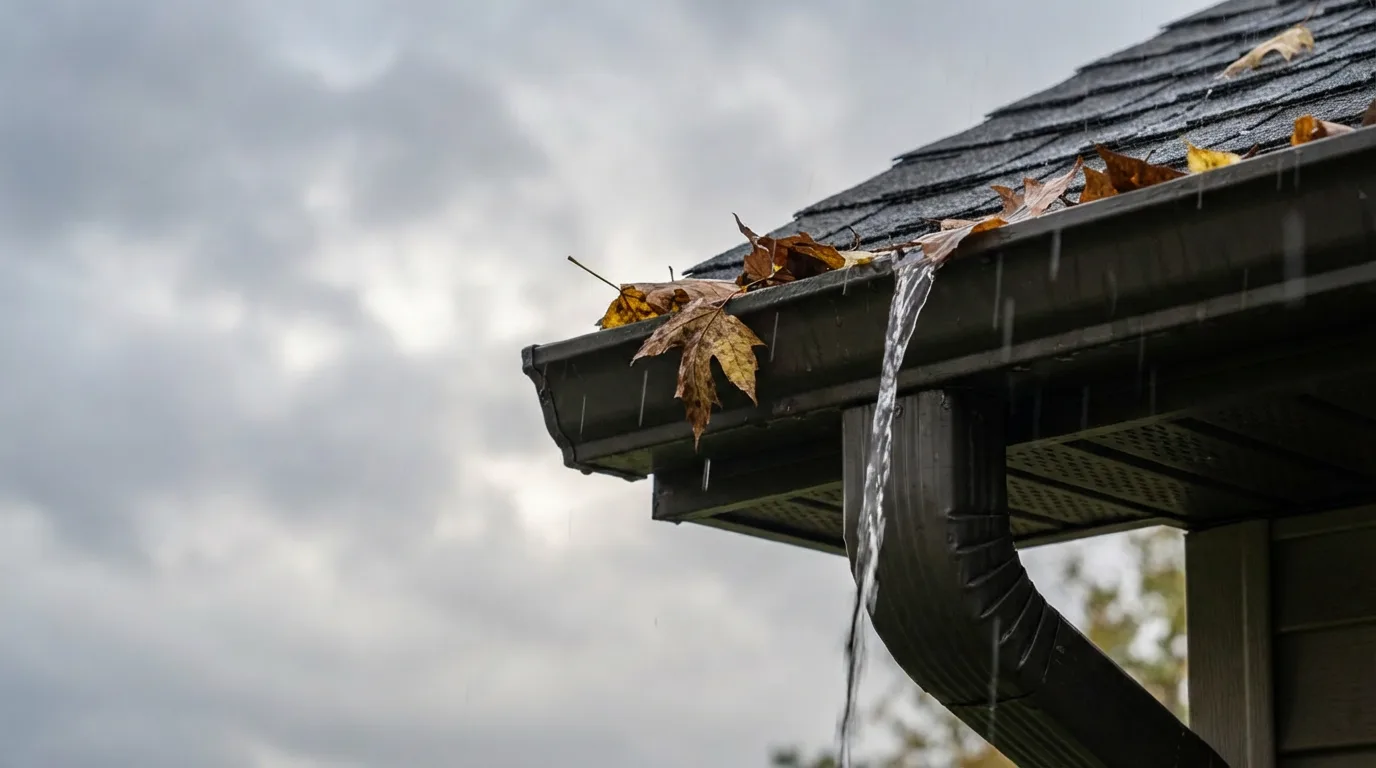
Extended rainfall events test the true carrying capacity of a system. If gutters are undersized, poorly sloped, or lack sufficient downspouts, water begins to overflow long before the storm ends. Water may overshoot the gutter entirely on steep roofs. In other cases, gutters fill faster than downspouts can drain them, causing temporary backflow.
The amount of water your roof collects is way more than you think.
Spring also introduces another complication: roof debris left over from winter. Small branches, granules, and early pollen can reduce flow efficiency, creating micro-dams that disrupt drainage long before a homeowner notices a clog.
This is why spring could be the best time to evaluate system design rather than just maintenance.
Summer: Thermal Expansion and Storm Intensity
Summer brings a different type of stress to gutter systems. Metal gutters, especially aluminum, expand and contract significantly with temperature swings. During long hot days, gutter channels can expand slightly, placing stress on fasteners, hangers, and joints.
Over time, repeated thermal movement can loosen attachments and slowly alter gutter slope. Summer thunderstorms also create high-intensity rainfall events, which behave very differently from steady spring rain. When large volumes of water hit a roof in a short period, runoff accelerates rapidly.
You might have noticed that gutters installed with minimal slope or marginal capacity struggle during these short bursts. Water may temporarily outrun the downspouts, creating brief but dramatic overflow conditions. This is one reason experienced installers carefully balance gutter pitch, outlet spacing, and system sizing during installation.
Fall: Debris Load Changes System Behavior
Fall introduces the most visible challenge for gutter systems: debris accumulation.
Leaves, seed pods, and organic material change the internal dynamics of a gutter channel. Even partial debris buildup can slow water flow, causing water to rise within the gutter and reduce its effective capacity.
The issue here is not just clogs, rather it’s hydraulic friction. As debris settles inside the gutter, it increases resistance within the channel. Water slows down, sediment accumulates faster, and the system begins operating far below its intended efficiency.
Fall inspections often reveal early signs of stress such as sagging sections, water staining along fascia boards, or small separation points at joints. For systems located near mature trees, fall conditions can essentially simulate years of normal wear within a single season.
Winter: Freeze-Thaw Cycles Stress the System Structure
Winter introduces mechanical stress that many homeowners overlook.
When water remains inside a gutter system and temperatures drop, it freezes and expands. This creates localized pressure within the channel, especially in areas where slope is minimal or debris prevents proper drainage. Repeated freeze-thaw cycles can gradually distort the gutter channel, loosen fasteners, and pull sections away from the fascia.
Snow accumulation on roofs also contributes to structural stress. As snow melts and refreezes near the roof edge, ice can form inside the gutter channel or along the drip edge. These small structural changes frequently lead to performance problems once spring rain returns.
Climate Patterns Shape Long-Term System Performance
Over multiple years, regional weather patterns shape how gutter systems age. Homes in regions with frequent heavy rain require larger gutter profiles and carefully spaced downspouts. Areas with strong seasonal winds may experience faster debris accumulation.
Locations that experience wide temperature swings place greater stress on metal systems due to expansion cycles. Experienced professionals rarely evaluate gutters in isolation. Instead, they consider the interaction between roof geometry, climate patterns, and water volume.
Do you know when to repair or replace your gutters? If not, ask the experts.
This broader perspective allows them to design systems that remain stable under changing seasonal conditions rather than performing well only under ideal circumstances.
What Professionals Look for During a Gutter Inspection
When professionals inspect a gutter system, they often look beyond obvious damage.
They evaluate whether the gutter profile matches the roof’s runoff potential. They check slope consistency across long runs. They examine hanger spacing and fascia integrity to ensure structural support remains strong.
Most importantly, they analyze how the system is likely to behave during the most demanding weather conditions of the year, not just how it looks on a dry day. This approach turns a simple gutter inspection into a form of preventive maintenance for the entire drainage system.
Schedule a Free Inspection
Weather affects every gutter system differently. Roof size, local climate patterns, tree coverage, and installation quality all play a role in how a system performs over time.
If your gutters haven’t been evaluated recently, a professional inspection can identify small issues before seasonal weather turns them into larger problems.
Schedule a Free Inspection to have your gutter system evaluated for capacity, structural stability, and long-term performance. A proactive inspection today can prevent costly drainage issues tomorrow.

What Makes Copper Gutters a Lifetime System
What Makes Copper Gutters a Lifetime SystemCopper gutters aren’t chosen [...]
When Aluminum Gutters Fail (And What Usually Causes It)
When Aluminum Gutters Fail (And What Usually Causes It) [...]

A Homeowner’s Breakdown of Gutter Materials (From Budget to Premium)
A Homeowner’s Breakdown of Gutter Materials (From Budget to Premium)If [...]
Repair vs. Replacement: How to Know Which One Your Gutters Need
Repair vs. Replacement: How to Know Which One Your [...]
Call us today and we would be happy to assist you.